
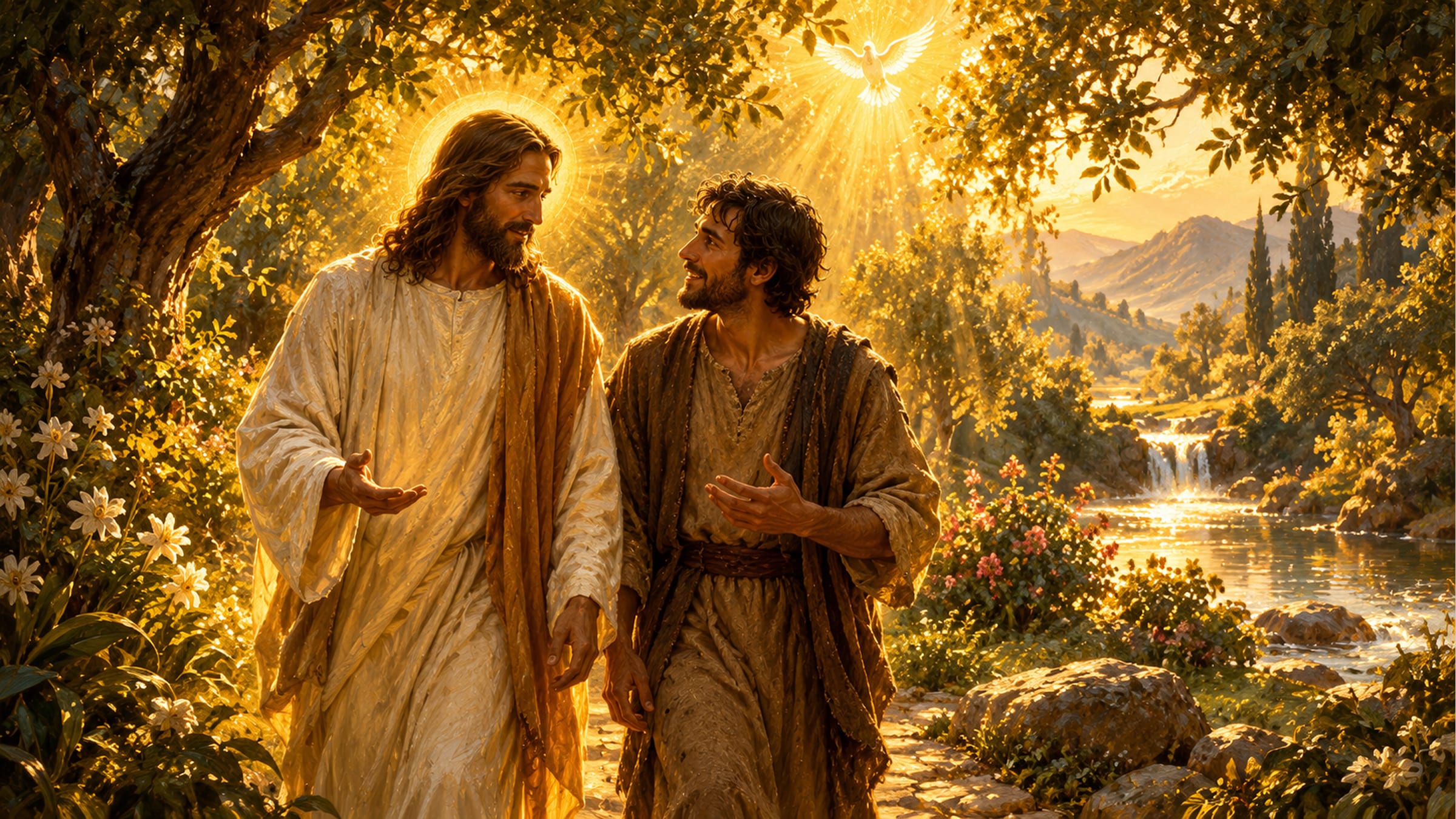
A Relationship with God: The Way and the Walk
Learning to walk with God, and showing up for the people he gave you.
What this is
A 30-day individual study of walking with God, from the garden where Adam hid to the city where nobody hides. It follows the oldest picture of faith in the Bible through five movements: the Way, the wander, the return, showing up, and the destination. Each day is a reading, key takeaways, and a prayer, written for one man learning to follow Christ as a husband, father, friend, and neighbor, because nobody walks in the abstract.
How to use it
- 1.Download the study file.
- 2.Open your AI of choice (ChatGPT, Claude, whatever you use) and upload it.
- 3.Ask it to make the study yours. Here's a starting prompt:
Here is a 30-day Bible study, "A Relationship with God: The Way and the Walk". Turn it into a calendar starting next Monday, with one entry per day: the reading, a two-sentence reflection in plain language, and a short prayer I could actually pray. Keep my voice conversational, not churchy.
A look inside
First 3 of 30 daysGenesis 2:4–25; 3:1–24
Before there is a law, a temple, a sacrifice, or a single commandment beyond one tree, there is a walk. God forms a man from dust, breathes into him, plants a garden, builds a woman from his side, and the two of them live in his presence with nothing to hide. Then the serpent asks a question, trust breaks, and the next thing we hear is the sound of the LORD God walking in the garden in the cool of the day. That line is the hinge of the whole Bible. He hasn't stopped coming. They've started hiding. The first symptom of sin isn't rebellion or violence; it's a man behind a tree who used to walk out to meet God and now can't stand to be seen. Everything after this, every covenant, every prophet, every road in this study, is God working to get that walk back. And it's worth noticing that he keeps walking even after they hide. He calls out "Where are you?" not because he's lost them but because they've lost him, and he wants them to say so.
Lord, you were walking in the garden before Adam ever hid from you, and you kept walking after. I know the trees I hide behind: being busy, being fine, being the guy who has it handled. You already know where I am. Teach me to answer when you ask. I want to be a man who walks out to meet you in the cool of the day instead of one you have to come find. Amen.
Genesis 5:1–24; Hebrews 11:1–6; Jude 14–15
Genesis 5 is a list of men who lived and died. Adam, Seth, Enosh, Kenan, one after another, each entry ending with the same four words: and then he died. Then Enoch breaks the pattern. He walked faithfully with God, and he was no more, because God took him. That's the whole biography, and it's twice as long as anyone else's in the chapter because the writer couldn't say "he died." Hebrews names him as the man who pleased God, and says you can't please God without faith, without believing he is there and that he rewards the ones who seek him. Enoch wasn't famous for an act. He had no ark, no altar, no sacrifice on record. He had sixty-five years of ordinary life, then a son named Methuselah, and then three hundred years of walking. Hebrews says nothing about what he did, only that he walked, and that walking was faith made visible. That's the standard this study is after: not a man who visited God on special occasions but one whose whole life was the walk, day after day, until the walk simply didn't stop.
Father, I want my life to read like Enoch's. Not famous, not dramatic, just a man who walked with you for a long time and didn't quit. Help me believe you're actually there on the ordinary days when nothing's happening. Reward my seeking the way you promised, and let the walk go all the way to the end. Amen.
Genesis 6:1–22; 7:1–5; Hebrews 11:7
By Genesis 6 the earth is full of violence and every intention of the human heart is only evil continually. God regrets making man. In that context, one sentence stands out: Noah was a righteous man, blameless among the people of his time, and he walked faithfully with God. Same word as Enoch. Noah walked with God while everyone around him walked the other way, and the walk is what made him usable when God decided to start over. He builds a boat the size of a cargo ship on dry land, on the strength of a word about rain nobody had ever seen, and he does everything just as God commanded him. Hebrews says he condemned the world by his faith, which doesn't mean he lectured anybody. It means his obedience exposed, by contrast, how far everyone else had drifted. You don't need the culture's permission to walk with God. You need to keep walking when the culture stops.
Lord, I live in a world that mostly isn't walking with you, and some days I feel it pulling. Give me Noah's steadiness. Let me build what you tell me to build even when it makes no sense to anyone watching, and keep going for as long as it takes. I don't need the world's permission. I need to keep walking. Amen.
…and 27 more days.
Download the full study →