
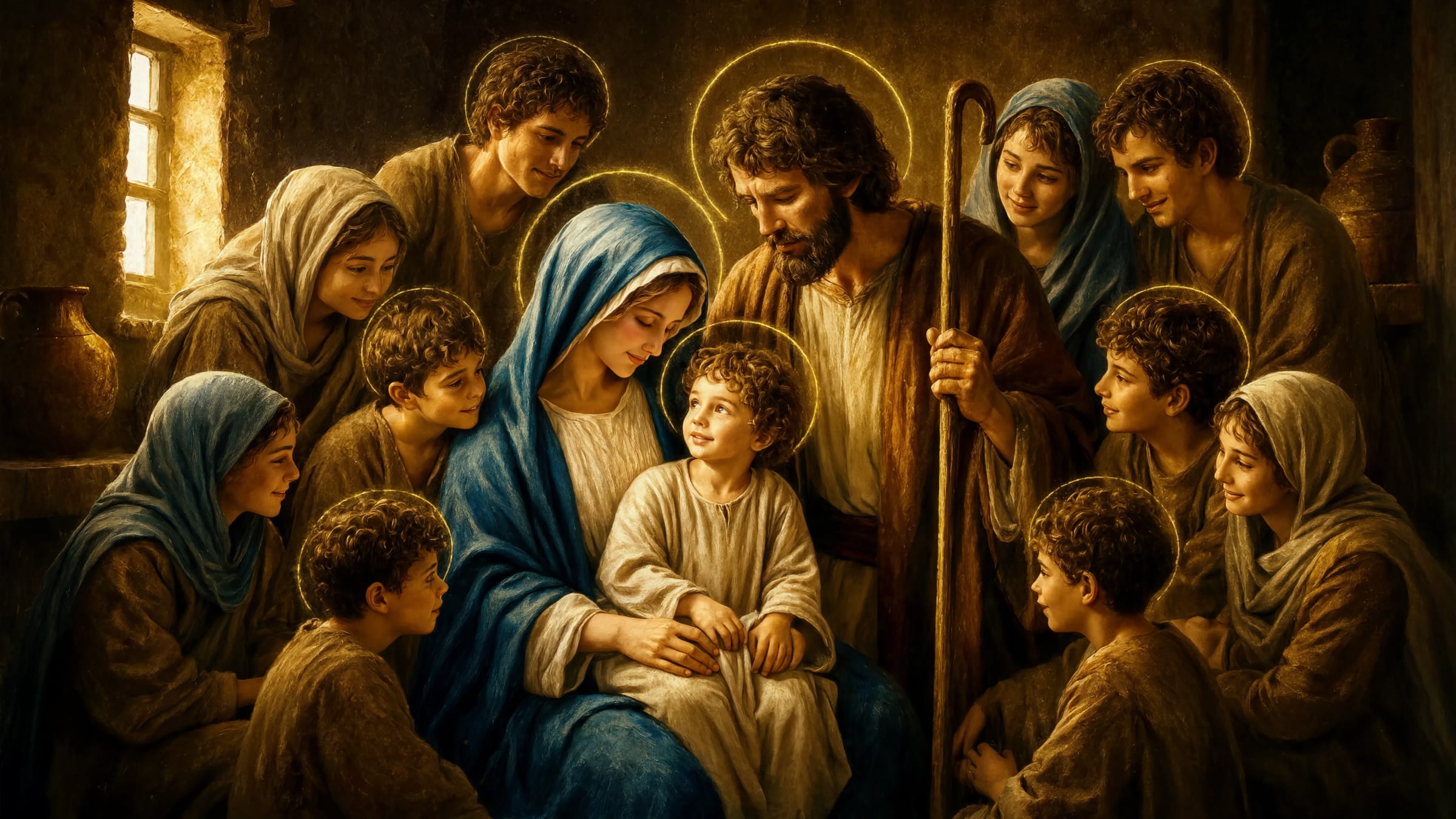
The Family of Jesus: From Nazareth to Savior
Jesus and the family that surrounded him.
What this is
From Abraham's promise through a Nazareth household to a skeptical brother who met the risen Christ, this study follows the actual people who made up Jesus's family, and asks what it cost them to recognize who he was.
How to use it
- 1.Download the study file.
- 2.Open your AI of choice (ChatGPT, Claude, whatever you use) and upload it.
- 3.Ask it to make the study yours. Here's a starting prompt:
Here is a 14-day Bible study, "The Family of Jesus: From Nazareth to Savior". Turn it into a calendar starting next Monday, with one entry per day: the reading, a two-sentence reflection in plain language, and a short prayer I could actually pray. Keep my voice conversational, not churchy.
A look inside
First 3 of 14 daysGenesis 12:1–9; 22:1–18
God calls Abram out of his country and kindred with a promise wrapped in a blessing, I will make of you a great nation, and in you all the families of the earth shall be blessed, and Abram obeys immediately, taking his household and going as the LORD told him. Decades later God tests that same promise directly, telling Abraham to offer his long-awaited son Isaac as a burnt offering. Abraham obeys again, raising the knife before an angel stops his hand and a ram is provided in the thicket; he names the place The LORD Will Provide. Genesis 22 repeats and intensifies the original promise, adding that Abraham's offspring will possess the gate of his enemies, because he obeyed God's voice even to the point of risking the very son the promise ran through.
Father, thank you for a promise that started with a call to leave everything familiar, and that survived a test I can barely imagine facing myself. I don't always trust promises I can't yet see fulfilled, let alone promises that seem to threaten the very thing they depend on. Give me Abraham's willingness to go and to trust, and let me believe that what you've started in my own family is part of something reaching further than I can see. Amen.
Genesis 38; Ruth 3:1–4:17
Judah's story is not flattering. He fails to give Tamar the husband he owes her, she disguises herself and conceives by him, and when he learns the truth he admits she was more righteous than he was. Centuries later Ruth, a Moabite widow with no claim on Israel at all, follows Naomi's instruction to approach Boaz at the threshing floor and ask him to act as her kinsman-redeemer. Boaz clears the legal path with a closer relative at the city gate, buys back Naomi's family land, takes Ruth as his wife, and the women of Bethlehem name their son Obed, who becomes the grandfather of David. Both women enter the family line through irregular, even scandalous circumstances, and both end up named in Matthew's opening chapter as ancestors of the Messiah.
Lord, thank you for a family tree that includes people the rest of the story would rather forget, and for a redeemer who did the hard, public, legal work of buying back what was lost. I've made choices I'm not proud of, and so did the people whose names are written into your Son's own ancestry. Let that be evidence of what you do with imperfect people rather than an excuse to stay that way. Amen.
2 Samuel 7:12–16; 2 Kings 25:1–12; Jeremiah 22:24–30
God promises David an heir whose throne will be established forever, a promise so central it shapes the rest of the Old Testament's expectations. Centuries later that throne falls: Jerusalem is besieged, its wall is breached, the king is captured trying to flee, his sons are killed in front of him, his own eyes are then put out, and the temple itself is burned to the ground. Into that same collapse, Jeremiah pronounces a devastating curse on King Jeconiah, also called Coniah: write this man down as childless, for none of his offspring shall succeed in sitting on the throne of David. The promise and the curse appear to collide directly, since Jeconiah is a descendant of David, and any future king would seemingly need to come through a line God himself just cut off, in a kingdom that no longer even exists.
God, some of your promises look not just delayed but actually destroyed for generations before I ever see how they resolve. Teach me to hold Jeremiah's hard word and David's unconditional promise together without rushing to explain away either one. Thank you that you were already working out an answer in the ashes of Jerusalem, long before anyone alive then could have seen it. Amen.
…and 11 more days.
Download the full study →