
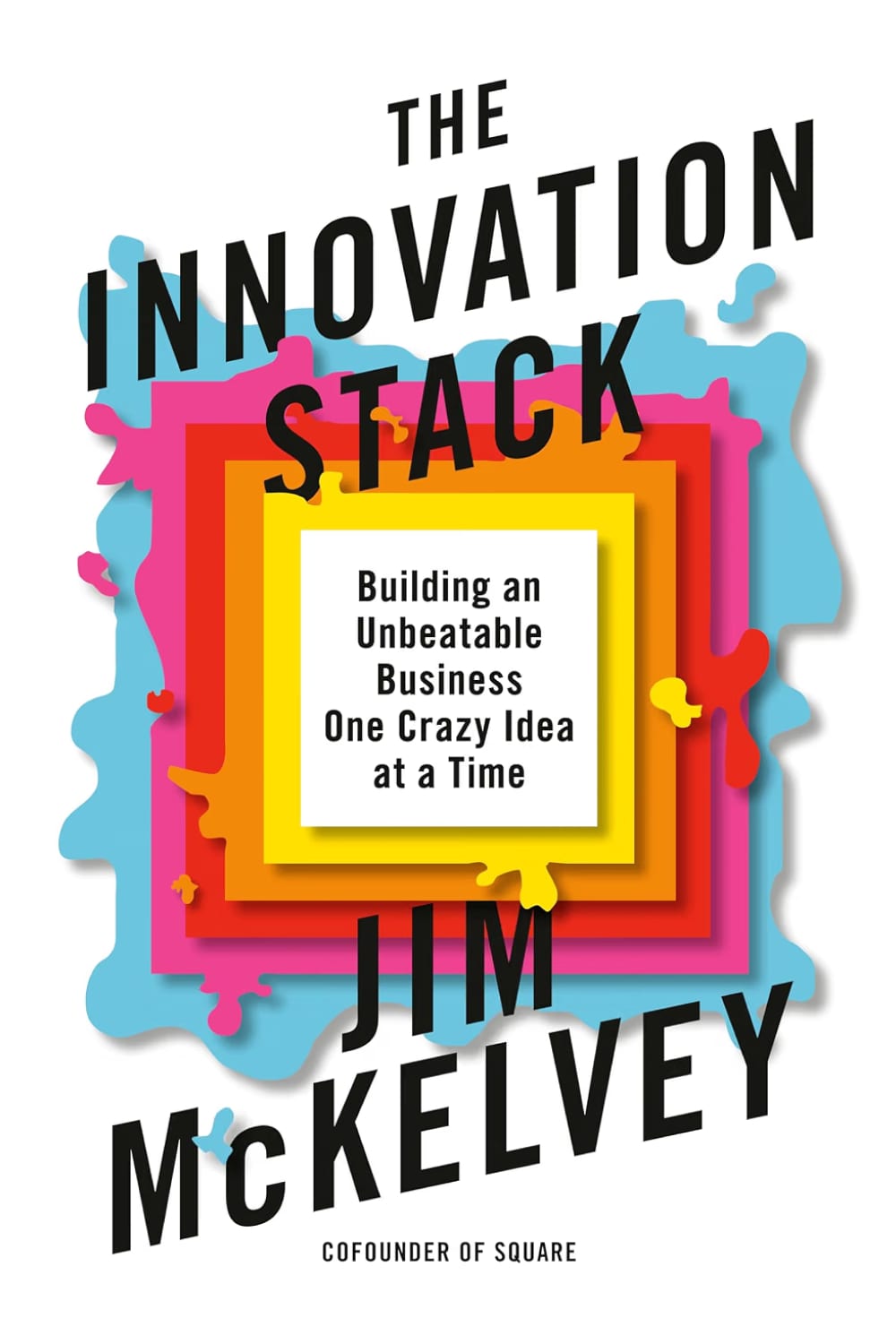
A fantastic book about innovation and how four companies and their founders (Bank of Italy, Southwest Airlines, Square, and Ikea) used a stacking of small innovations chained together in a unique way to solve a problem that had not yet been solved. The book cites examples from four very different industries and shows how this can be used for your startup or business today.
Favorite Quote(s)
"There is always a reason no one has done it, and the reason is rarely that they just aren't as smart as you. As inventive as you might be, there's only an infinitesimal chance that you're the first person to invent whatever you think you invented." ~ Jim McKelvey (page 34)
"We did the absolute minimum amount of invention that we could do to survive, and in the process of doing that, ended up with over a dozen things that nobody had ever done." ~ Jim McKelvey (page 57)
Key Takeaways
- An Innovation Stack isn't one big idea, it's a chain of small, forced inventions that only exist because no existing solution would work.
- If a problem seems unsolved, assume there's a real reason, usually a hard constraint, not that everyone before you missed something obvious.
- Do the minimum invention necessary to survive. McKelvey's team wasn't trying to innovate for its own sake, they were forced into it by their constraints.
- Once a company builds a real Innovation Stack, it becomes very hard for competitors to copy, because they'd have to replicate every piece, not just one clever feature.
- Great innovation stories span very different industries (banking, airlines, furniture, payments) but follow the same underlying pattern of necessity-driven invention.