
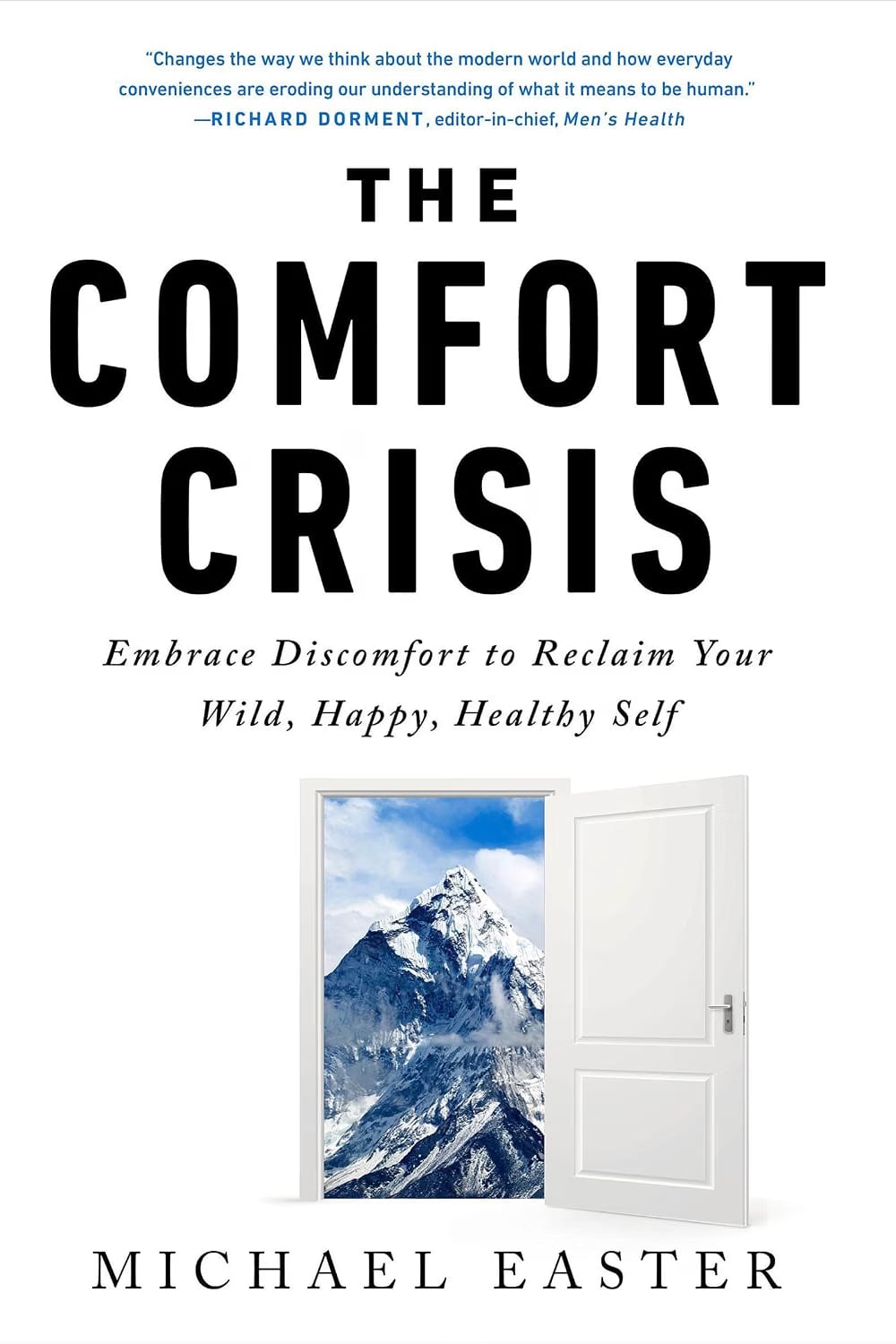
Discover the evolutionary mind and body benefits of living at the edges of your comfort zone and reconnecting with the wild. Award-winning journalist Michael Easter sets out to answer whether our sheltered, temperature-controlled, overfed, underchallenged modern lives are actually the leading cause of many of our most urgent physical and mental health issues. To find out, he joins a month-long caribou hunt in the Alaskan wilderness, and along the way uncovers a practical blueprint for using discomfort to improve health and happiness.
Favorite Quote
"Most people today rarely step outside their comfort zones. We are living progressively sheltered, sterile, temperature-controlled, overfed, underchallenged, safety-netted lives." ~ Michael Easter
Key Takeaways
- Try a misogi: one enormous, self-designed physical challenge a year with roughly a 50% chance of failure. The goal isn't the outcome, it's what the challenge reveals about your own limits.
- "Comfort creep" means the bar for what counts as a problem keeps dropping the more comfortable life gets. Removing minor discomforts doesn't make us happier, it just lowers our tolerance for the next one.
- Boredom is a feature, not a bug. Modern life is engineered to eliminate it, but boredom is where creativity and clearer thinking actually come from.
- Hormesis, mild, intentional stress like fasting, cold exposure, or hard physical effort, can build resilience rather than just wear the body down.
- "Rewilding" your environment on purpose, walking more, carrying weight, eating simpler food, reintroduces the kind of friction humans evolved to handle and thrive on.
- Confronting scarcity and even mortality directly, rather than sanitizing them out of daily life, tends to sharpen gratitude and purpose rather than causing despair.