
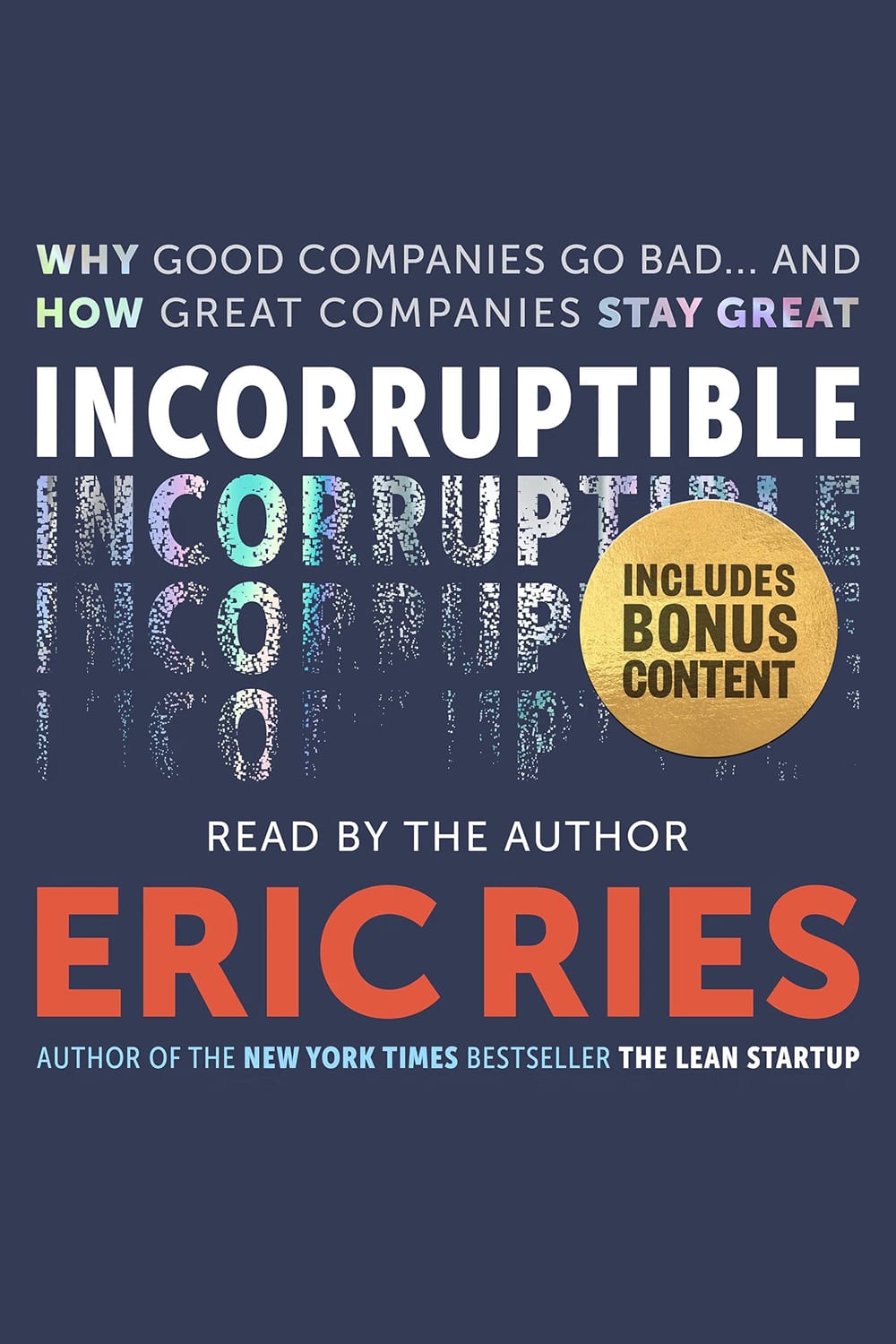
Incorruptible is Eric Ries's boldest work since The Lean Startup. Where his earlier books offered tools for product innovation and scaling, this one tackles a deeper, systemic question: why do even the best companies drift from their missions and betray the trust of customers, employees, and investors? Ries argues the culprit isn't greed or bad actors, it's the way we define profit and structure governance. Using case studies spanning startups, established corporations, and public institutions, he shows how organizations can build governance structures strong enough to resist short-termist pressure and mission drift.
Favorite Quote
"Success itself becomes a form of financial gravity, bending companies away from their original purpose." ~ Eric Ries
Key Takeaways
- Corporate corruption is usually structural, not a story of bad actors. Even principled leaders get pushed toward outcomes they never wanted when the underlying governance is poorly designed.
- Reframe profit as the maximization of human flourishing, not the sole measure of whether a company is winning.
- Build a "governance exoskeleton," charters, ownership structures, and accountability systems strong enough to preserve a company's mission through crises, growth, and leadership succession.
- Quarterly earnings pressure is a major structural cause of mission drift, not just an unfortunate side effect of being public.
- "Incorruptible" or "mission-controlled" companies aren't naive about profit. The book argues that doing good and doing well are aligned, not in tension, when governance is designed correctly.
- This is Ries's first major work since The Lean Startup, and it shifts his focus from how to build a product to how to build an organization that can't be pulled away from its own values.