
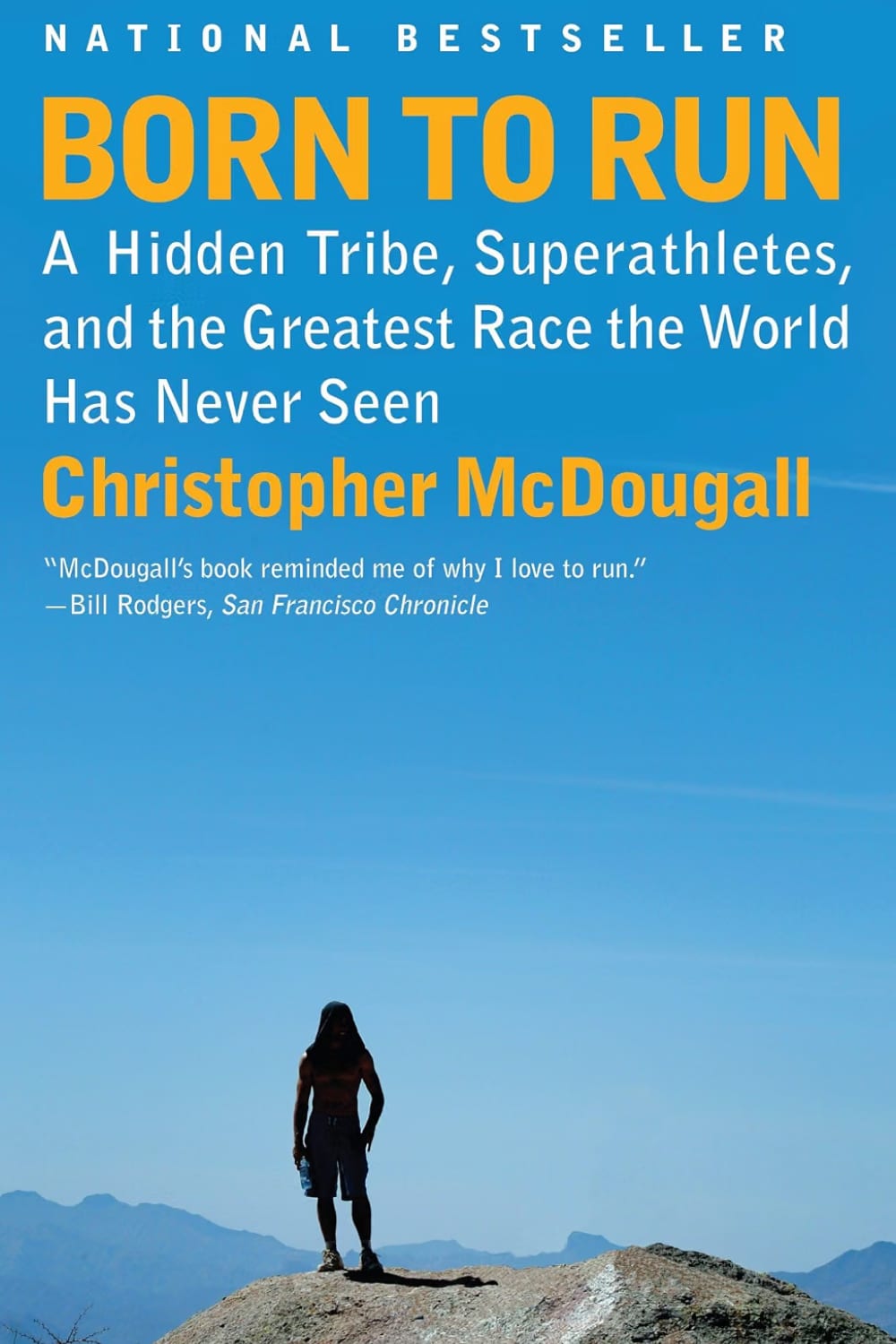
Born to Run started with one simple question: why does my foot hurt? Award-winning journalist and often-injured runner Christopher McDougall goes searching for the answer and stumbles onto the Tarahumara, a reclusive tribe in Mexico's Copper Canyons who run hundreds of miles at a time, well into old age, without the injuries that plague modern runners. The book weaves together the science of running, the rise (and possible flaws) of the modern running shoe, and a climactic 50-mile race that pits America's best ultrarunners against the tribe.
Favorite Quote
"The reason you don't know the human body is capable of these feats is because you rarely see it tested at its outer limits. We've been taught to think that our bodies are weak, but that's a lie." ~ Christopher McDougall
Key Takeaways
- The rise of the modern, heavily cushioned running shoe correlates with, and may actually contribute to, the modern epidemic of running injuries rather than preventing it.
- The Tarahumara run enormous distances essentially injury-free, largely because of how they run, not because of any genetic gift.
- Humans may be evolutionarily built for endurance running. Persistence hunting, chasing prey over long distances until it collapses from exhaustion, is one of the oldest human survival strategies.
- Community and joy matter as much as physiology. The Tarahumara don't run to punish themselves, they run because it's part of a shared, celebrated way of life.
- Simpler is often better. Minimalist footwear and better running form can matter more than the latest technology.
- The ultrarunning community itself, eccentric, obsessive, and deeply supportive, is as much a character in this book as the race itself.